
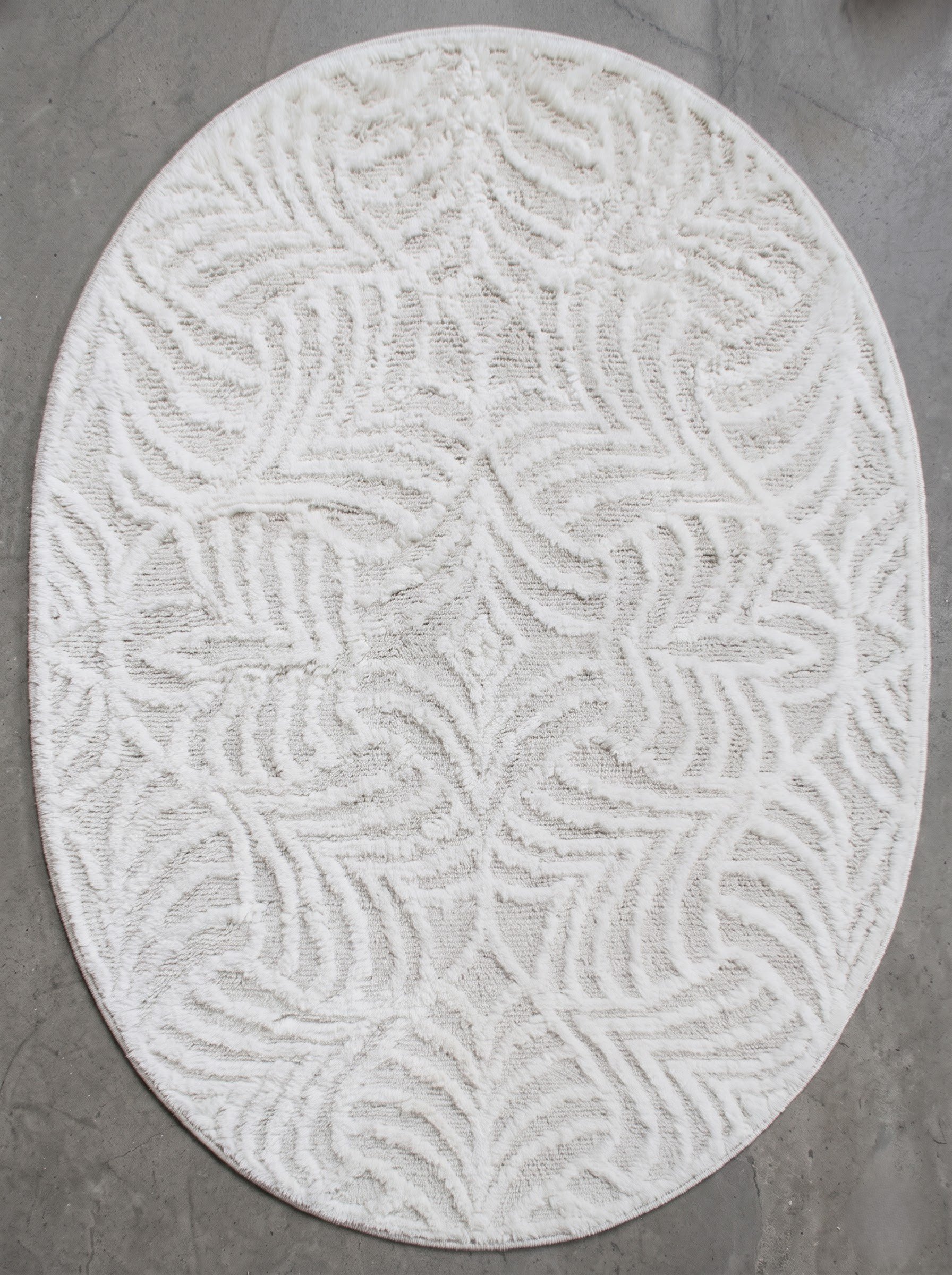
A rug is the architectural anchor of any room. A beautifully crafted handmade carpet can unify furniture, introduce rich texture, and establish acoustic serenity. Yet, even the most exquisite hand-knotted masterpiece will feel out of place if the proportions are wrong. The number one mistake homeowners and designers make is selecting a rug that is too small, creating what stylists call the "floating island" effect.
Whether you are selecting a standard format or commissioning a bespoke piece from Paliram Carpets, this practical guide walks you room-by-room through selecting the ideal dimensions, silhouette, and proportions.
Golden Rules of Rug Sizing: The Foundation of Interior Balance
Before pulling out your measuring tape, remember these universal design guidelines:
- Leave an 18-inch border: In standard rooms, aim for 12 to 18 inches of exposed floor between the edges of your rug and the room walls. In compact spaces or apartments, an 8-to-10-inch perimeter maintains proper scale.
- Go larger when in doubt: A larger rug expands the visual boundaries of a room, while an undersized rug shrinks the visual volume.
- Use painter's tape to map: Outline your intended rug dimensions on the floor using blue painter's tape before ordering to double-check walkways and clearances.
For detailed dimensional charts, visit our comprehensive Size Guide.
Sizing Your Living Room Rug: All Legs On, Front Legs On, or Float?
Living rooms are conversation zones that require thoughtful furniture integration:
- Front Legs On (Most Popular): Place the front legs of your sofa and armchairs on the rug while keeping rear legs off. This works magnificently with 8x10 ft and 9x12 ft rugs, establishing a cohesive seating arrangement without swallowing the entire room.
- All Legs On (Spacious Rooms): In open-concept floor plans, a 10x14 ft or 12x15 ft rug accommodates all furniture legs completely on the rug surface, defining the lounge area as its own distinct room.
- All Legs Off (Floating): Only suitable for compact accent areas or small studios where a coffee table sits on a 5x8 ft rug with seating pulled back.
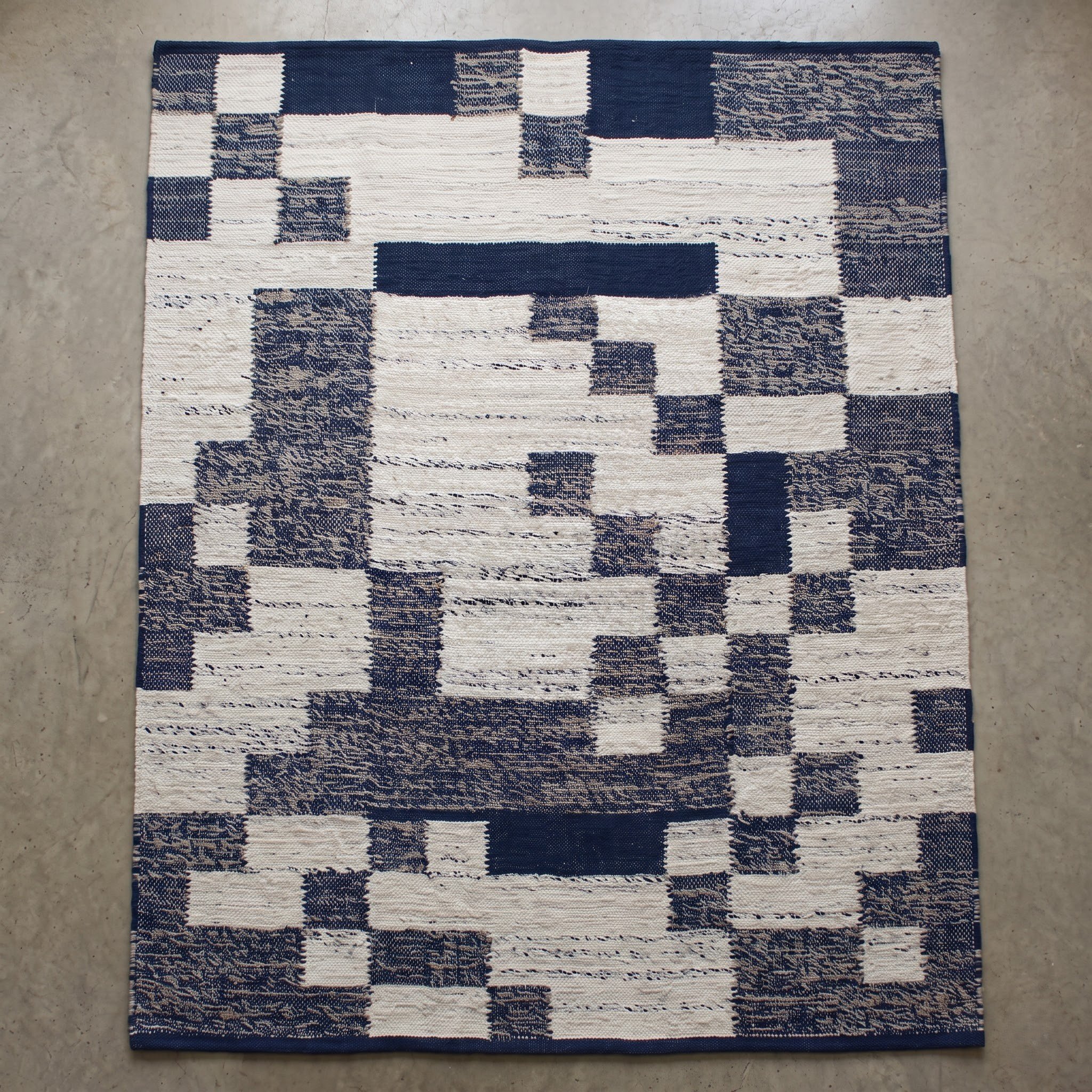
Bedroom Rug Sizing: Framing Queen and King Beds with Elegance
Your bedroom rug should provide plush warmth the moment your feet touch the ground each morning:
- Queen Beds: An 8x10 ft rug placed perpendicular to the bed allows roughly 24 to 30 inches of soft coverage on both sides and at the footboard.
- King Beds: A 9x12 ft or 10x14 ft rug provides generous, balanced margins on either side of larger frames.
- Runner Pair Alternative: For narrow bedrooms, placing matching 2.5x8 ft runners on either side of the bed offers symmetry without requiring furniture moving.
Dining Room Rug Rules: The Essential 24-Inch Chair Clearance
Dining rooms require one non-negotiable rule: The 24-Inch Rule. Your rug must extend at least 24 inches (60 cm) beyond all sides of the dining table so chairs remain securely on the rug even when guests pull them out to sit down.
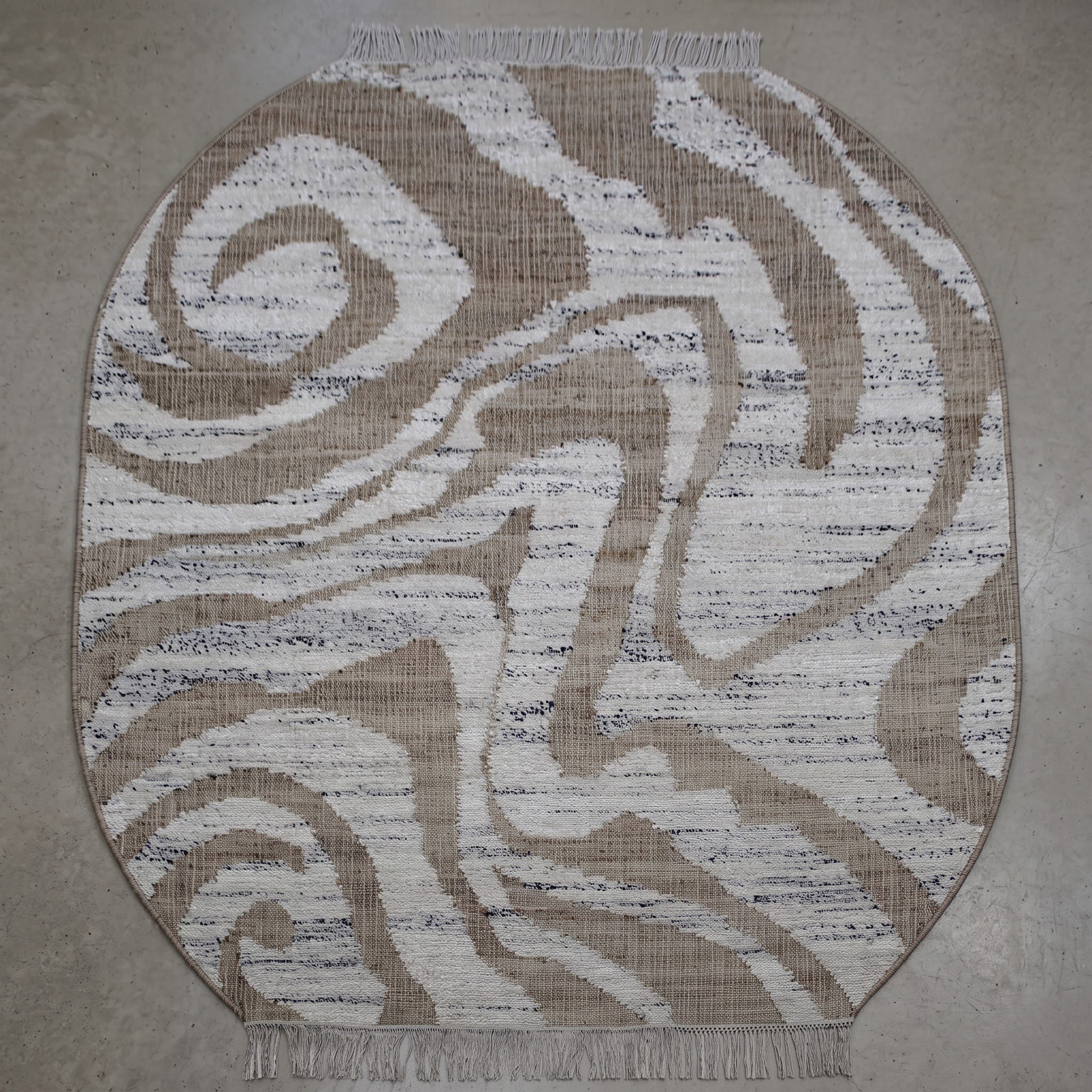
Choosing the Right Shape: Rectangle, Round, Oval, Runner, or Freeform?
While classic rectangles represent the majority of commissions, breaking away from standard shapes creates extraordinary interior drama:
- Rectangular: Classic, architectural, and grounding for standard rectangular dining tables and sofa configurations.
- Round & Circular: Ideal under circular dining tables, in square entry foyers, or beneath cozy reading nooks.
- Oval & Pill: Softens rectilinear spaces while providing lengthwise coverage for long sectional seating.
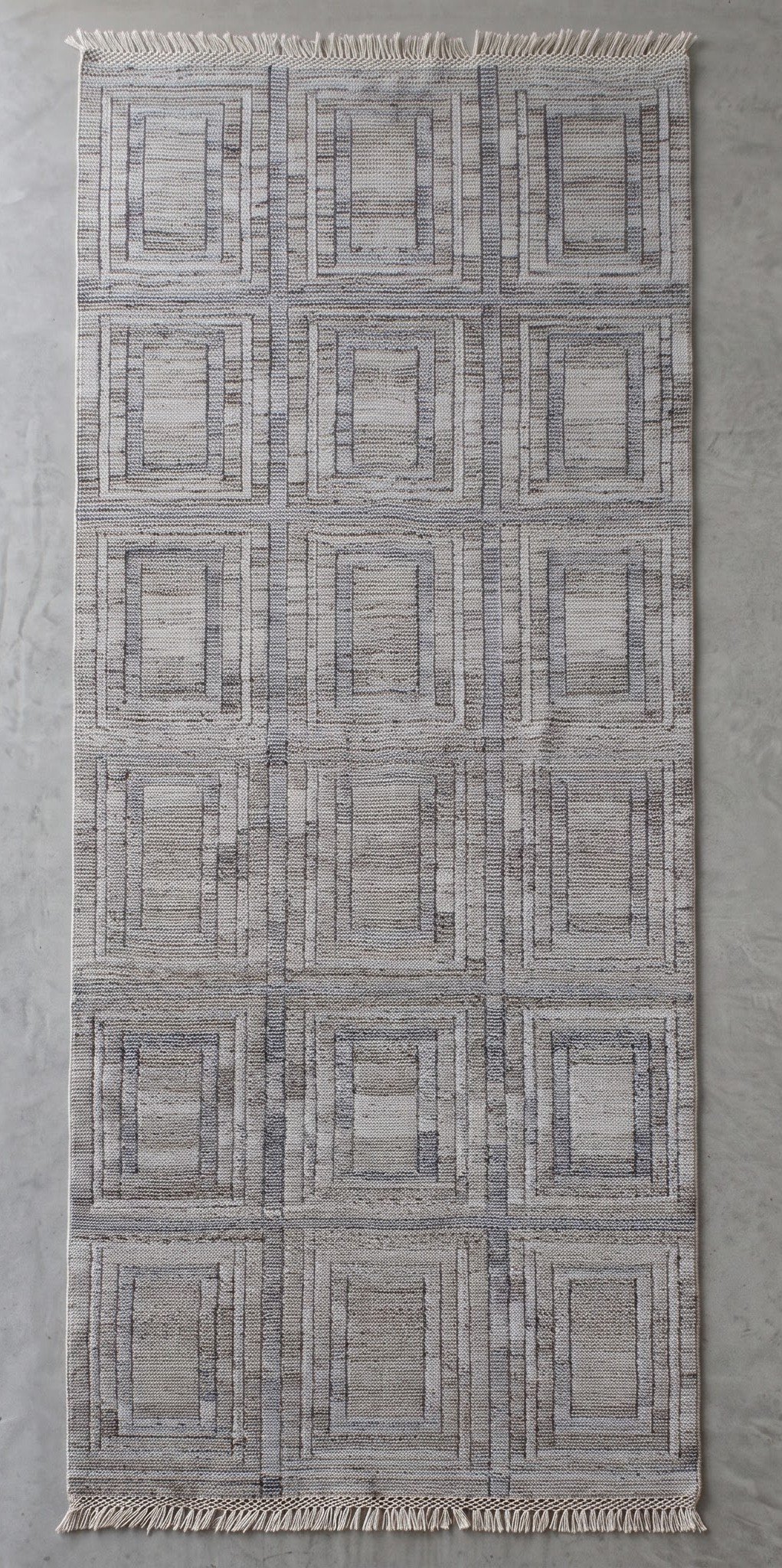
- Runners: Designed for hallways, galley kitchens, staircases, and bedside paths.
- Freeform & Asymmetrical: Explore our collection of Custom Shape Carpets to design wavy, kidney, or irregular silhouettes that make a singular artistic statement.
Visualizing Your Rug Before Buying: The Paliram 3D Room Visualizer
Choosing the correct rug dimensions no longer requires guesswork or risky approximations. With our state-of-the-art 3D Room Visualizer, you can upload a photo of your actual living room, bedroom, or dining space and test different sizes (5x8, 8x10, 9x12, custom) and shapes in realistic 3D perspective before ordering.
Bespoke Sizing Made for Your Space
Do you have an irregular architectural floor plan, angled fireplace, or curved bay window? Our Mirzapur weavers build custom looms tailored specifically to your dimensions. Submit your bespoke inquiry via our Customize Your Rug portal or get in touch with our design team at Contact Us.
Frequently Asked Questions on Rug Sizes and Shapes
What is the standard rug size for an 8x10 living room?
For a standard living room, an 8x10 ft or 9x12 ft area rug is ideal. It allows at least the front legs of your sofa and accent chairs to rest securely on the rug, pulling the seating cluster together.
How much floor should show around the edges of a rug?
The golden rule of interior design is to leave 12 to 18 inches of exposed bare floor between the perimeter of your rug and the room walls. In smaller rooms, an 8-inch border is acceptable.
When should I choose a round or organic custom shape rug instead of rectangular?
Round, oval, or organic freeform rugs work best under circular dining tables, in entry foyers, in nurseries, or to soften rigid architectural angles in modern rooms. They also visually expand cramped or irregularly shaped spaces.
How does the Paliram 3D Room Visualizer work?
The Paliram 3D Room Visualizer allows you to photograph your room or upload a picture, select any Paliram rug texture or custom shape, and instantly see it rendered in realistic perspective, size, and lighting directly on your phone or laptop screen.
Ready to Find Your Perfect Fit?
Try our interactive tools now to visualize shapes and sizes in your home, or speak directly with our bespoke rug specialists.
Open 3D Visualizer →